 Available in GB
Compare dice play with other casino formats, review bonus terms and separate crypto searches from craps; each wager remains an exposure to chance.
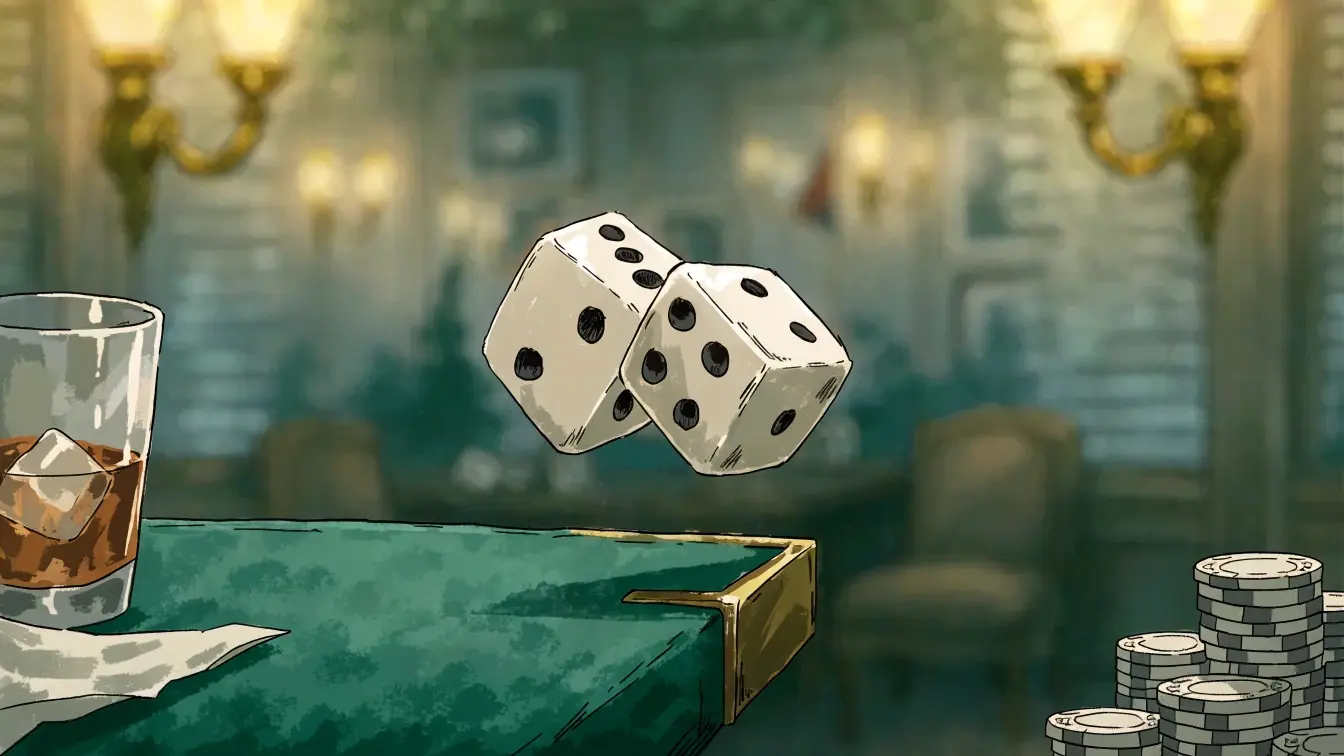
An overview of casino dice play, related game formats, bonus terms and the uncertainties around outcomes and payments.
What Casino Dice Games Have in Common
A casino dice game is built around a simple exchange: you stake cash or chips on an outcome, and the result determines whether that stake wins or loses. The outcome may be a single result or a combination of results. The appeal is easy to understand. You can make a decision, see the result, and know what happened without waiting long. But a quick result is not the same as a predictable one.
The central feature is uncertainty. Before a result is known, a player is choosing which possibility to back; the game then produces an outcome that may or may not match that choice. A win can happen, sometimes more than once in a short run, but it does not show that the next result is due to go the same way. Nor does a run of losses make a later win inevitable. Each wager is a separate exposure to chance, not a step towards a guaranteed recovery.
That distinction matters when comparing the enjoyment of a session with its likely financial direction over time. Casino games typically give the casino a predictable long-term advantage while leaving players with the possibility of short-term gains. In plain terms, individual results can favour you, but repeated play is structured to favour the casino overall. A winning session is possible; it does not alter that general balance.
The advantage is not a promise about what will happen to any one person, or on any particular visit. You might leave ahead after a short session, or lose the amount you brought to play. The long-term pattern describes the game’s underlying economics across repeated gambling, not a schedule that dictates the next result. Treating it as a forecast for a single session would give it more precision than it has.
This is why a dice game’s apparent simplicity should not be confused with an edge for the player. A small number of visible possibilities can make a wager feel straightforward, but the important question is still what the stake is placed on and how the game treats the outcome. Without understanding that relationship, it is easy to focus on the moment of a possible win and overlook the broader arrangement: money is risked against uncertain results under rules that, over time, tend to benefit the house.
Chicken Road Game in UK Casinos: What to Know
The same basic idea applies whether the wager concerns one possible result or a combination. You are not buying an outcome; you are staking money on the chance that it will occur. The fact that a choice can be described clearly does not make it certain, and a result that looks meaningful after it happens does not necessarily predict what follows. Hindsight is persuasive, but it does not turn chance into a pattern you can rely on.
It also helps to separate the game’s result from your decision to continue. A win does not make the next stake safer, and a loss does not make another stake a way to retrieve money already gone. Each new wager puts additional funds at risk. If you choose to play, decide in advance what you are comfortable losing and regard that amount as entertainment spending, not as money expected to come back. That boundary cannot change the odds, but it can stop a short run of results from quietly changing the amount you meant to risk.
A useful way to assess any dice casino is therefore not to look for a label such as “best” or “top” and assume it answers the important question. The underlying point is the same across casino gambling: stakes concern possible random outcomes, and short-term gains are possible, while the casino has the predictable advantage over the long run. A ranking cannot make an uncertain result certain, nor can an attractive presentation remove the financial risk.
For a player, the practical starting point is modest: know that you are staking money on chance, keep the possibility of losing in view, and do not treat a win as proof that future results will follow. Casino dice play can be easy to grasp at the level of a single wager. Its harder lesson is that an enjoyable run and a favourable long-term expectation are not the same thing.
Game Nature Uncertain outcomes with a long-term house advantage
Primary Risk Individual results are random and do not predict future outcomes
Key Distinction Short-term gains do not change the underlying economics
How Online Dice Play Fits Into the Wider Casino
Casino games can be offered through online casinos where the law permits. That changes how you access a game, but the word “online” does not, by itself, explain how its outcome is produced. For an online dice game, it is useful to separate the format you see on screen from the mechanism that determines the result.
Some online casino games are random number games. In this format, a computer or other gaming equipment generates selected random numbers, which determine the game outcome. The screen may show dice rolling or settling, but that animation is a representation of the result, not an explanation of how it was selected. A visual roll alone cannot tell you whether a game uses this kind of random-number process.
That distinction matters when you are trying to understand an online dice casino. The name or graphics may suggest a familiar physical game, while the actual play takes place through a digital interface. You make selections or place a stake within the game, and the result is presented on screen. To understand the specific rules, look at the game’s own information rather than assuming that the animation tells the full story.
The same point applies when comparing online casino dice games with other casino games. Their appearance can differ, but what matters is how the particular game defines a round, what choices it gives you and how it displays the outcome. Those details are not established merely by a title containing “dice” or by seeing dice on screen. If the rules are unclear, do not treat the imagery as a substitute for them.
Mines Casino Game in the UK: Rules and Risk
Online availability is conditional in the UK. Online gambling is legal only at licensed and regulated sites, and operators serving Great Britain consumers must hold the relevant UK Gambling Commission licence. A game being accessible through a website does not, on its own, establish that the site is authorised to offer it to people in the UK. The legal position concerns the operator as well as the game.
This is worth keeping in mind when you encounter a site offering dice games online. A search result, a game preview or a playable-looking interface is not proof of UK authorisation. The law is not a feature of the dice game itself; it applies to the operator offering gambling to customers. If you are considering playing for money, confirm that the operator holds a current UKGC licence. Where that condition is not met, the site is outside the UK’s licensed online gambling framework.
A free-to-play option also needs to be understood on its own terms. A no-cost demonstration, if offered, is not the same as gambling for money, and its presence does not establish that the operator is licensed to accept UK customers’ real-money play. Nor does a free version necessarily show every condition that applies to paid play. Read the information attached to the specific game and site instead of assuming that a free mode and a real-money game work identically.
Do
- Confirm the operator holds a current UKGC licence
- Read the specific game rules and outcome generation details
- Use free-to-play modes only for demonstration
Don’t
- Assume visual animations explain how results are selected
- Treat a website’s accessibility as proof of UK authorisation
- Assume free versions work identically to real-money play
For a reader looking to play casino dice online, the practical checks are straightforward: establish whether the operator is authorised for the UK market, read how the game describes its rules and pay attention to how it says outcomes are generated. Those are separate questions. A clear explanation of the game does not confer a licence on the site, and a licence does not tell you the details of every game it offers.
“Online dice casino” can therefore describe a visual theme, a way of accessing a game or a particular random-number format, but those are not interchangeable meanings. Treat the game’s presentation as one clue, its rules as the explanation of play and the operator’s UKGC status as the separate question of whether it may legally offer online gambling to you.
Different Casino Game Formats, Beyond the Dice
A casino game’s format affects how you take part, who runs the game and whether you are playing alone or alongside other people. The broad distinction is between machine games and table games. Dice can be associated with a table format, but the presence of dice alone does not tell you how a game is organised or who you are playing against.
Machine games: play at your own pace
A gambling machine is generally used by one player at a time. You operate it yourself, without a casino employee needing to run each turn. That makes the experience more individual than a table game: you do not need to wait for a dealer to manage a round, and other players are not usually taking part in the same game with you.
JetX Casino Game in the UK: How It Fits
This distinction is about the way the game is played, not a promise about what it contains. A machine game might be described with dice imagery or dice-like features, but that does not make it a dice table game. Nor does a dice theme, by itself, establish that the machine reproduces a particular table game. The useful question is whether you are playing a machine-based game on your own or taking part in a table game run by a dealer.
If you are looking for casino games with dice, that distinction helps keep the categories clear. A machine may borrow the look of dice, while a table game may use dice as part of a format conducted by a dealer. Those are different ways of playing, even if the same familiar symbols appear in both.
Table games: a dealer runs the game
Table games are generally conducted by a croupier or dealer. Players compete against the casino, rather than against one another. The dealer’s role is part of the structure: they conduct the game, while players take part under its rules.
That makes table games different from a machine played individually. There is a shared table setting and an employee overseeing the play, but the other people at the table are not necessarily your opponents. The casino remains the party you are playing against. This matters when you are deciding what you mean by dice games at a casino: you may be thinking of a table game involving dice, rather than a machine that uses dice as a visual theme.
Machine games
Generally played by one person at a time without a dealer.
Table games
Conducted by a dealer or croupier where players compete against the casino.
The phrase “dice table game” describes a broad format, not a complete explanation of the rules. The format tells you that dice are involved and that play takes place at a table; it does not, on its own, explain the available choices or how a round is settled. You need the game’s own rules for those details. It is also worth separating the use of dice from the question of whether a game is played against the casino: a game’s equipment and its competitive structure are not the same thing.
Choosing by format, not just by theme
When comparing casino games played with dice, start by identifying the format. Is it a machine game, played by one person without an employee running each turn? Or is it a table game, usually conducted by a dealer, where players compete against the casino? The answer gives you a clearer picture of the experience than a title or a graphic alone.
This also prevents a common category mix-up. “Dice game” can refer to what you see or use during play, while “machine game” and “table game” describe how the game is organised. A dice-themed machine remains a machine format; a table game that uses dice remains a table format. Similar imagery does not make the games interchangeable.
If you prefer to play independently, a machine may suit that style because it is generally played by one person at a time. If you prefer a game conducted by a croupier or dealer, a table format is the relevant distinction. Neither description says that one is automatically simpler, more sociable or more favourable than the other. Those conclusions depend on details of the individual game, not on whether it uses a screen or a table.
Crash Casino Games in the UK: How They Work
For casino dice games in the UK, therefore, the first useful distinction is not a long list of titles. It is whether dice appear within an individual machine game or within a dealer-run table game. Once you know which format you are considering, you can read that game’s rules to understand how participation works.
UK Casino Sites and the Offshore Distinction
A site offering dice games to UK players is not necessarily part of the UK-regulated casino market. The important distinction is whether its operator holds a licence from the UK Gambling Commission (UKGC) to offer real-money gambling to customers in Great Britain. A dice-themed lobby, a UK-facing website or accepting UK players does not by itself establish that status.
A specialist review has described the online casino market in 2026 as having two parallel parts: UKGC-regulated operators and offshore platforms outside the UKGC system. That description needs a clear qualification. Offshore casinos can accept UK players, but they do not hold a UKGC licence and are not regulated by the Commission. Their accessibility should not be confused with authorisation to serve the British market.
For operators offering real-money gambling to customers in England, Scotland and Wales, a UKGC licence is required. The distinction therefore matters whether you are looking for a casino game with dice, a dice slot or a broader selection of casino games. The name or theme of a game tells you nothing about the operator’s licensing position.
Attention An offshore site may accept UK players without being a UKGC-licensed operator.
If you are assessing a site described as a trusted dice casino, start with the operator’s status rather than the wording of its promotions or the presence of familiar game categories. A UKGC licence is the relevant marker of participation in the UK regulatory system. An offshore site may present itself as available to UK players while remaining outside that system; those are two different claims.
This is also why “UK casino sites with dice games” can mean more than one thing in casual conversation. It might refer to a UKGC-licensed operator, or simply to an offshore casino that accepts customers from the UK. The latter does not become UK-regulated because it has dice games, dice slots or a UK-facing page. Treating the two as interchangeable obscures the central issue: who licenses the operator to offer gambling to people in Britain?
The distinction is about the site’s regulatory status, not a judgement about how a particular dice game plays. If the operator is outside the UKGC space, it is not a UKGC-licensed casino, even if UK players can access it. If it is offering real-money gambling to customers in Great Britain, the licensing requirement applies. A game catalogue cannot substitute for that licence.
Dice-Roll Slots: Demo Play and the Rules on Spins
A slot with dice imagery or a dice-roll feature is still an online slot: you stake money on a spin and its outcome, rather than taking part in a live dice game. That distinction matters if you are looking for a dice-roll slot demo or free play. A demo may let you try a game without staking cash, but the wording alone does not establish that a particular title has a demo, or that one is available at a particular casino. Check the game and operator’s own information before relying on a free-play option.
Aviator Casino Game UK: What to Check
The same applies to names such as “roll the dice” or “dice and roll”. They can describe a theme or feature, not a standard set of rules shared by every game. Read the displayed rules to see what triggers a feature and how the slot settles a spin. If you mean how to play dice at a casino, or how to play craps, that is a different format from a slot: a slot’s dice graphics do not make it a table dice game.
Spin speed and autoplay in Britain
Online slots at UK-licensed casinos are subject to specific rules. Each spin must take at least 2.5 seconds, and autoplay is not allowed. You must start each spin yourself; a game cannot run a sequence of spins automatically. These rules apply even when a slot has a quick-moving animation or a dice-roll feature. The visual pace does not change the minimum time for a spin.
There are also stake limits. Players aged 25 and over can stake no more than £5 per spin. For players aged 18 to 24, the maximum is £2 per spin. The £5 limit for adults came into effect on 9 April 2025; the lower limit applies to the younger age group. These are maximums, not recommended amounts, and the game’s available stake options may be lower.
Online gambling in Britain is legal only through operators holding the appropriate UK Gambling Commission licence. That requirement applies to remote operators serving British customers, including those based elsewhere. A site offering access to a dice-themed slot is not, by that fact alone, evidence that the site is licensed.
UK Slot Rules
Online slots at UK-licensed casinos must follow specific regulations:
- Each spin must take at least 2.5 seconds.
- Autoplay is not permitted; you must start each spin yourself.
- Maximum stakes are limited: £5 per spin for players aged 25+, and £2 per spin for players aged 18 to 24.
Before playing, check whether the product is a slot, whether a demo is actually offered, and what its rules say about stakes and features. A free-play mode, where available, is separate from real-money play; it does not remove the rules that apply when you switch to staking money. Nor does the word “dice” tell you how a real casino dice game works.
Reading Casino Bonus Terms Before You Opt In
A casino bonus is not necessarily cash you can withdraw. If an offer includes bonus funds, its wagering requirement states how much you must stake before those funds, or any winnings linked to them, become eligible for withdrawal. Read the rule alongside the offer’s expiry conditions and any limits on which games count; the headline amount alone does not tell you what you must do.
The calculation is the bonus amount multiplied by the wagering multiple. A £20 bonus with a 10x requirement means £200 in total stakes. That is the amount wagered across qualifying bets, not an instruction to place one £200 bet. A specialist review of the 2026 rules reports that, from 19 January 2026, an incentive cannot require wagering of more than 10 times the bonus funds.
An older illustration helps show why the multiple matters: £100 in bonus funds with a 35x requirement would mean £3,500 in stakes before cash-out. That arithmetic is correct, but a 35x requirement exceeds the current cap for an incentive and should not be treated as a compliant offer under the rule in force since 19 January 2026. A large wagering figure can turn a seemingly generous bonus into a substantial commitment.
Live Dream Catcher Casino in the UK: What to Check
Check whether the requirement applies to bonus funds, the bonus plus your deposit, or another stated amount. The example above uses bonus funds as the base; offers can define their own calculation basis, so the wording matters. Also look for qualifying-game terms and withdrawal conditions before you opt in. If a condition is unclear, do not assume that every stake will count.
The product covered by an incentive matters too. A specialist review of the 2026 rules notes that a single incentive cannot combine different gambling products, such as casino play and betting. A casino bonus therefore should not require you to place bets on another product to unlock its reward. That restriction concerns the structure of the offer, not whether the promotion sounds attractive.
For dice-themed casino play, apply the same checks as you would to any casino promotion: identify the bonus amount, the wagering multiple, the stakes that count and the conditions for withdrawing. A promotion’s label does not replace its terms. If the offer gives a 10x requirement, work out the total stakes before accepting; if its terms appear to demand more, or tie the reward to another gambling product, pause rather than relying on the headline.
Crypto Casinos and Craps: Keep the Two Searches Separate
A casino’s payment options and its game catalogue are separate things. A platform that accepts cryptocurrency is not necessarily one that offers craps, and the presence of dice-themed games would not, by itself, establish that a craps table is available. Treat claims about payments and claims about specific games as separate details to verify.
Payment methods like Bitcoin, Ethereum, and Litecoin are separate from the game catalogue and do not guarantee the availability of specific games like craps.
A specialist review has described alternative platforms as accepting Bitcoin, Ethereum and Litecoin alongside conventional cards and e-wallets. That is a report about payment methods, not a guarantee that every platform supports each option today. Non-traditional platforms may also operate under licences from Curaçao, Malta or Gibraltar. Those licences do not make an operator part of the UKGC system: remote gambling operators serving Great Britain need a UKGC licence.
The distinction matters if you are considering a crypto casino for craps. The word “dice” can refer to different kinds of play, while craps is a particular casino game. A payment page showing cryptocurrency does not tell you whether craps is in the catalogue, whether it is available to UK customers, or which rules apply. Check the operator’s game information and licensing status separately rather than inferring one from the other.
Searches for top dice casinos can also blur these questions. A ranking is not evidence that a listed site accepts crypto or offers craps, and a platform’s own description is not a substitute for checking what it actually provides. Be wary of language that bundles “crypto”, “dice” and “craps” into one promise without spelling out the relevant details.
For UK players, the legal position is important: online gambling is legal only at sites holding the appropriate UKGC licence. Offshore casinos may accept UK players while operating outside that regulatory system, but they are not UKGC-licensed. A cryptocurrency payment option does not change that status.
What to Expect From a Casino Dice Game in the UK
A casino dice game is a form of gambling in which you stake cash or chips on an outcome associated with a roll, or on a combination of possible outcomes. The exact options depend on the game’s rules: a wager might concern one result or a set of results, and the rules determine what counts as a win.
That is the useful starting point if you are comparing dice games in a UK casino. The word “dice” describes the equipment or theme, but it does not tell you what you can bet on, how a winning result is settled or what happens to your stake when a prediction is wrong. Read the rules before placing a wager rather than assuming that games with dice work alike.
Online Casino Tournaments in the UK: Formats and Rules
A casino game is not a way to make a result certain. Your stake is attached to a possible outcome, and the result may not match your prediction. A winning bet can bring a short-term gain; a losing one can cost the amount staked. Treat the money as at risk, not as a payment that will return to you.
The term can also be used loosely. Someone looking for casino dice may mean a game built around physical or virtual dice, a table game with dice-related wagers, or a slot with dice imagery. Those are not necessarily the same kind of game. The title and artwork alone do not establish how a game works: its rules and pay conditions do.
If a platform accepts cryptocurrency, that describes a payment option, not the rules or reliability of a dice game. Keep those questions separate. First establish what the game asks you to predict and how it settles a bet; then consider whether its payment arrangements suit you. The distinction is practical: a familiar dice theme does not make an unfamiliar wager self-explanatory.
Bitcoin, Deposits and Withdrawal Timing
Bitcoin may appear as a payment option on some alternative gambling platforms, alongside other cryptocurrencies such as Ethereum and Litecoin. Specialist reviews have also reported platforms accepting conventional cards and e-wallets. Payment methods vary by operator, so the presence of Bitcoin at one site does not establish that another accepts it; check the payment information for the specific service before relying on a particular route.
The practical questions are not limited to whether a deposit can be made. You may also want to know how a withdrawal is processed, whether the same method must be used for both directions, and what conditions apply before funds can be released. Those details are operator-specific. A cryptocurrency payment option does not, by itself, tell you how quickly a withdrawal will arrive or what checks may apply.
Timing claims need the same care. Some specialist reviews report that deposits can be credited instantly and withdrawals completed within hours rather than days at many platforms. That is a reported pattern, not a promise for every transaction. Processing can depend on the platform and payment method, and a stated withdrawal time should not be treated as a guaranteed arrival time unless the operator’s terms say so.
Crazy Time Live Casino Game Show in the UK
If you are comparing a Bitcoin casino that offers dice games, separate the payment feature from the game itself. Bitcoin describes how money may be moved; it does not identify a particular dice title, establish that a bonus is available, or confirm that a named game such as Sic Bo is offered. Check those details independently in the operator’s own information.
Before depositing, read the payment terms for any fees, currency conversion, withdrawal conditions and processing estimates. Keep a record of what the operator says. A quick deposit can be easy to notice; a withdrawal policy is more useful to understand before you send money.
Dice-Themed Slots and the Limits of the Available Evidence
A slot with dice imagery is not necessarily a game in which you roll physical dice. The dice may be part of the artwork, or they may appear as symbols within the machine’s play. The label “dice-themed” describes a broad idea, not a particular set of rules. To understand what a game actually offers, you need its own title and rules rather than an assumption based on its theme.
Online Bingo UK: Games, Bonuses and Slots
The same distinction matters when you are looking for a slot built around a dice roll. That phrase can refer to a machine whose visuals or features involve dice, but it does not by itself establish how outcomes are decided or what happens during play. Nor does a dice motif make a slot equivalent to a casino game where you throw dice: those are different descriptions, and one should not be treated as proof of the other.
“Free” can also mean different things in a listing. It might describe access to a demonstration mode rather than play for cash, but the wording alone does not confirm that a particular game has such a mode. Check the game’s own information and the terms attached to any free-play option before treating it as available.
Casino machines are generally played by one person at a time, without a casino employee running each turn. That helps distinguish a machine from a dealer-led table, but it does not identify a specific dice-themed slot or tell you how its features work.
If you encounter references to a roll-the-dice slot, three dice, or free dice play, look for a named game and rules that match the description. Without those details, the phrase is a theme or claim, not a reliable guide to the actual product.