 Available in GB
Learn how to check a casino’s own live-game catalogue for Dream Catcher and tell an accessible game apart from a listing or mention.
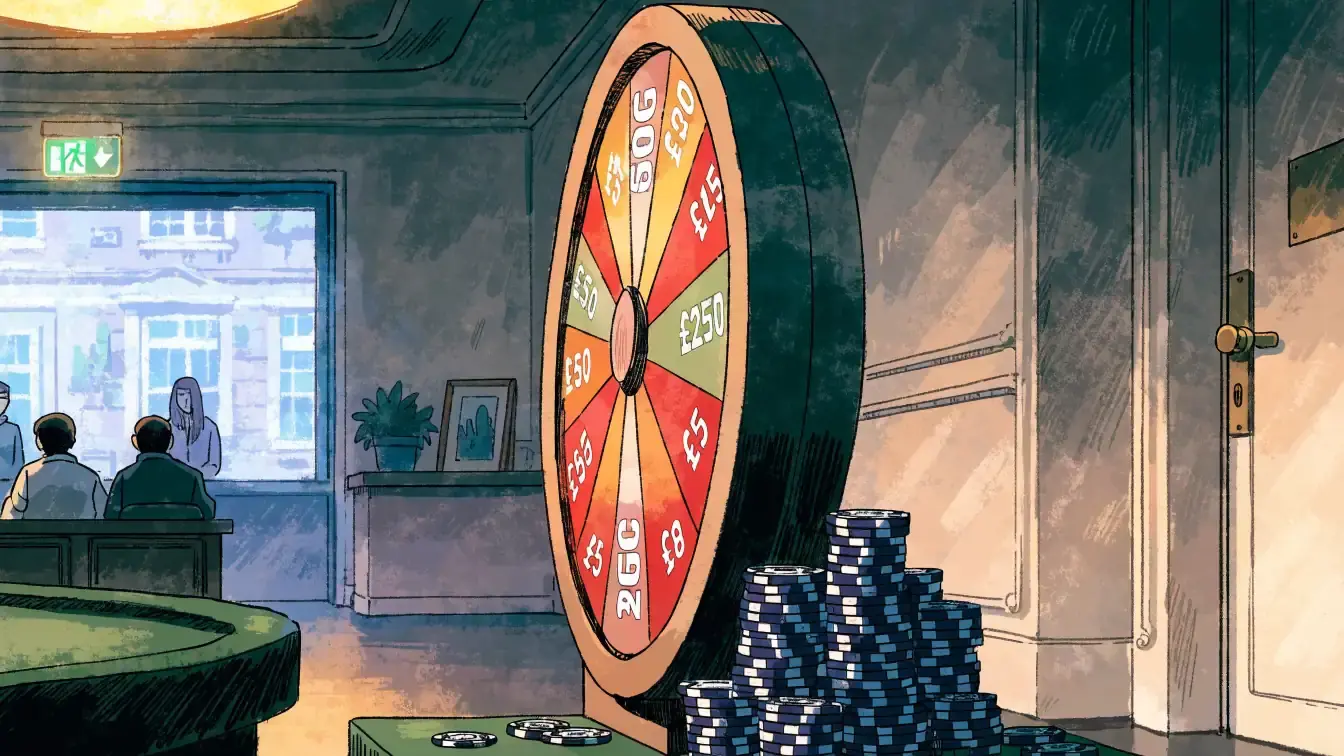
A casino’s live-game claim does not confirm Dream Catcher is available or playable on its site.
What to check before looking for Dream Catcher online
A casino’s general claim to offer live games does not establish that it has Dream Catcher. Treat availability as a specific detail to confirm, not as something implied by a live-casino page, a search result or a familiar-sounding game catalogue.
Start with the casino’s own site, rather than relying on a page elsewhere that lists games. Look for its live-casino lobby or game catalogue and search for “Dream Catcher” using the site’s own search box, if it has one. If the result is missing, try the provider or category filters only if the site makes those available. A broad result for “live games” is not enough: you need to see the requested title identified by name.
Check what the result actually represents. A listing in a general catalogue might be a description, a promotional page or an item that is not currently accessible. Look for an option to open the game, then note whether the site presents it as a live game or merely mentions it in text. Do not assume that a page labelled “live casino” contains every live title, or that a game mentioned in an article can be opened from that casino.
Availability can also be presented differently across a site. A title may appear in a search result but not in the live lobby, or the lobby may separate games into categories. If you cannot find a clear route from the listing to the game, contact the casino through its published support channel and ask whether Dream Catcher is currently offered to customers in the UK. Keep the question narrow: whether the named game is available, and where it can be found. A clear answer is more useful than a general statement that the casino has a live section.
Pay attention to the wording and date of any information you find. A page may describe a past launch or an older catalogue rather than the current offering. Grosvenor, for instance, announced live casino games in 2013, including card games and roulette; that historical announcement says nothing by itself about whether Dream Catcher is available there now. The same distinction applies to any operator: a past statement about live games is not confirmation of a present title.
Live Baccarat Online Casinos in the UK: What to Check
It can help to compare the casino’s lobby with its own help pages, but treat those pages as separate claims until they match. A support article may explain how to find live games without naming Dream Catcher. A catalogue may name the game but fail to show whether it can be opened. When the information conflicts, ask the operator to clarify rather than interpreting the more convenient version as confirmation.
Be cautious with search-engine snippets and third-party pages that place a casino’s name beside Dream Catcher. Search results can combine words from different parts of a page, and a page may discuss a game without offering it. A list of “casinos with” a particular title is not proof that each entry has been checked recently. Use such material as a lead to investigate, not as the final answer.
The wording of a site’s own result matters, too. “Available”, “coming soon”, “featured” and “related games” do not mean the same thing. A promotional banner may be visible even when the game is not accessible from the lobby. If a page does not tell you whether the title can be opened, ask for clarification instead of treating the mention as confirmation. Avoid creating an account simply to test an unclear claim; an operator should be able to explain its current catalogue before you make that commitment.
If you are comparing several online casinos with Dream Catcher in mind, use the same check for each one: find the title in its own live catalogue, confirm that the listing leads to the game, and ask support if the status is unclear. Record what you checked and when, since an online catalogue can change. This is a practical way to separate a confirmed listing from a result that merely sounds relevant; it is not a recommendation of any operator.
The phrase “best Dream Catcher casino” does not answer the first question you need to settle: whether a particular casino actually offers the game. Establish availability before comparing anything else. Do not infer it from a large live-game section, a casino’s history or the appearance of the game’s name on an unrelated page.
DO
- Check the casino’s own site and live lobby directly
- Confirm that the game listing leads to the playable game
- Contact the operator’s support channel if availability is unclear
DON’T
- Rely on third-party pages or search engine snippets
- Assume a general “live casino” label implies every title is available
- Create an account just to test an unclear claim
If you do decide to play, only gamble what you can afford to lose.
Dream Catcher casino: what this guide can verify
“Dream Catcher” can point to more than one thing in a casino context. It may be used to describe a game, a live-casino listing, or a site that uses the same words in its name or marketing. Those references are not interchangeable. Seeing the name on a page does not, by itself, establish who operates the site, who supplies a game, or whether the game is available to you.
That distinction matters because a product name is not a casino’s legal identity. A casino is run by a business, while a game may be supplied by a separate provider. A page can mention both without showing clearly which company is responsible for which part. Treating the phrase “Dream Catcher casino” as if it named one verified operator would blur those roles.
The same care applies to descriptions of a live game. The word “live” can indicate that a casino is presenting a live-dealer product, but it does not settle the game’s rules, format, availability or provider. Those details need to come from information tied to the specific product and the particular casino listing, not from the name alone. Nor does the phrase establish that a particular version is currently offered to customers in Great Britain.
These are separate claims, and each needs evidence that connects it to the relevant business or game.
Casino Dice Games in the UK: Formats and Terms
A useful way to read casino language is to ask what the statement actually refers to. A mention of the game is a claim about a product. A logo or company name may point to a business. A licence statement concerns permission to offer gambling to consumers in the relevant market. One does not prove the others: a game reference is not evidence of a licence, and a casino’s licence does not, by itself, establish that a particular game is on its lobby.
For readers in Great Britain, the distinction between a casino’s name and its legal operator has practical weight. The Gambling Commission regulates remote gambling offered to consumers in Great Britain, wherever the operator’s key equipment is located. Businesses serving those consumers must hold the relevant Commission licence. The Commission issues operating licences to businesses and personal licences to individuals working in regulated roles. A product label cannot substitute for the identity of the business responsible for the gambling service.
It is a limit on what the label can tell you. The Gambling Act 2005 governs gambling in England, Wales and Scotland; Northern Ireland has a separate legal framework. For a Great Britain-facing online casino, the relevant question is whether the business offering the gambling holds the appropriate UK Gambling Commission licence—not whether the words “Dream Catcher” appear prominently.
Search results and casino pages can also use similar wording for different purposes. A page may discuss a game without offering it, while a site may use the name in a promotional heading without being the game’s maker. Even a page that displays a playable product should be read in context: the operator, product and terms should be identifiable rather than inferred from branding. A familiar-sounding name is not a substitute for those connections.
A product name like "Dream Catcher" is not a substitute for a casino’s legal identity or its regulatory status.
“Dream Catcher” is a label that needs context before it can tell you anything reliable about a specific casino or game. The name alone cannot establish who stands behind an offer, whether a product is available, or what its particular characteristics are. Keeping those questions separate makes it easier to distinguish a product reference from an operator claim, and both from evidence about regulatory status.
If you decide to gamble, be aged 18 or over, use a properly licensed operator, and only gamble what you can afford to lose.
How to judge a Dream Catcher casino offer
An offer attached to a live Dream Catcher game is a set of claims, not proof that the game is available or that the promotion is worthwhile. Treat the headline as a starting point. Before you decide whether to sign up or deposit, find the full terms and check that they explain who can take part, what action is required and what happens after you accept.
A promotion may be presented as a welcome deal, a deposit offer or a reward for existing customers. The label alone tells you little about its value. Look for the precise conditions that apply to your account and the offer you have been shown. If important terms are absent, unclear or inconsistent across the advert and the full rules, do not assume the more generous interpretation.
Online Casino Tournaments in the UK: Formats and Rules
Read the terms behind the headline
Start by checking what you must do to qualify. Does the offer require registration, a deposit, a particular payment method or an opt-in step? Does it apply to new customers, existing customers or both? Are there exclusions, such as restrictions on who can claim it or which products count towards its conditions? The terms should let you understand the commitment before you act.
Next, establish how any reward is credited and what you can do with it. Promotional funds may be treated differently from cash in an account. Check whether the offer sets conditions on use, whether winnings are subject to separate rules, and whether the reward can be declined or removed. Do not rely on a short banner or a message that leaves these points unanswered.
Pay attention to the wording around wagering. A wagering requirement describes how much qualifying play is required before a bonus or associated winnings can be withdrawn. If an offer uses this term, check exactly what amount it applies to and which activity counts. Do not infer that playing Dream Catcher will meet a condition: the offer’s own rules should say which games or categories qualify, and whether any contribution limits apply.
Look for restrictions that could change the practical value of the promotion. These might concern eligible games, bet or wager sizes, withdrawal conditions, or the period in which the offer can be used. Read the terms as a whole rather than focusing on one attractive feature. A reward can sound substantial while its conditions make it difficult to use as you expected.
Verifying an offer
- Read the full terms and conditions behind the headline
- Check the specific requirements for qualifying play
- Confirm how and when any promotional rewards are credited
- Identify which games or categories are eligible for the offer
Separate a game claim from a bonus claim
An offer mentioning Dream Catcher does not, by itself, establish that the operator currently provides access to the live game. Check whether the promotion explicitly identifies the game and whether that statement appears in the applicable terms, rather than only in a general advert. Also distinguish between a promotion that can be used across a casino and one that is restricted to named products.
The same care applies to claims such as “exclusive”, “free” or “no deposit”. Ask what the phrase means in the actual terms. A reward described as free may still have conditions, while an offer described as exclusive may be available only to a defined group. If the operator does not explain the claim in a way you can verify before accepting, treat it as an unresolved detail, not a benefit.
Compare offers by the obligations they place on you, not by headline value. Consider whether you would make the deposit or play the game without the promotion. If the answer is no, the offer may be driving a decision that does not suit you. Do not deposit simply to unlock a reward, and gamble only what you can afford to lose.
Check who stands behind the offer
The terms should identify the operator responsible for the promotion and provide a way to read the rules before you accept. A brand name in an advert is not enough to establish which business is offering the deal. Make sure the operator named in the terms matches the account or site you are considering, and do not treat a third-party description as a substitute for the operator’s own conditions.
Crazy Time Live Casino Game Show in the UK
For customers in Great Britain, the Gambling Commission requires remote operators serving them to hold the relevant licence. That requirement is separate from whether a particular offer is attractive: a generous promotion does not replace regulatory checks, and an offer’s appearance on a page does not establish that the operator has met its obligations.
Finally, keep a record of the terms you accepted, including any confirmation shown in your account. If the conditions later appear different from the wording that persuaded you to take the offer, that record may help you explain the disagreement through the operator’s complaints process. If you cannot find the terms, cannot understand a key condition, or cannot tell who is responsible, the sensible response is to pause rather than guess.
Which Dream Catcher casinos can you verify?
A casino’s use of the Dream Catcher name is not, by itself, evidence that the operator is licensed or that the game is available there. Before depositing, establish which business runs the site and whether that business has the relevant permission to offer remote gambling to consumers in Great Britain. A list of sites using a game name cannot answer either question.
The UK Gambling Commission regulates gambling activity in the UK, including online casinos. In Great Britain, it is the sole regulator for commercial gambling. Its remit over remote gambling offered to people in Great Britain applies even when the operator’s key equipment is located elsewhere. A company cannot avoid the requirement by hosting its services abroad: remote operators serving Great Britain consumers must hold the relevant Commission licence.
Regulatory Verification
Match the operator’s legal name and licence number against the UK Gambling Commission’s public register.
The Commission issues operating licences to businesses and personal licences to individuals who work in specified roles in the industry. For a player assessing an online casino, the business’s operating status is the central point. A licence belonging to a different company, or a claim that an individual is licensed, does not establish that the business named on a casino site is authorised to provide gambling to you.
Check the UK Gambling Commission’s public register and compare the operator’s legal name and licence number with the information given on the casino’s own site. Do not rely on a logo, a statement that a site is “regulated”, or a licence number shown without checking it. The name behind a brand may differ from the brand name, so look for a clear connection between the site and the licensed business. If the details do not match, or the operator’s identity is unclear, do not treat the claim as verified.
This check concerns the casino operator, not the game’s name. Even if a business has the required licence, that fact alone does not establish that Dream Catcher is among its available games. Conversely, a page promoting a live Dream Catcher table cannot establish that the operator is licensed. Keep these as separate checks: identify who would hold your account and handle your funds, then establish that the game is actually offered by that operator.
Mines Casino Game in the UK: Rules and Risk
For Dream Catcher casinos in the UK, the useful question is therefore not simply which sites display the name. It is whether the business behind a particular site can be matched to a current operating licence covering the relevant activity. If you cannot make that match, you cannot verify the casino’s regulatory status from its own promotional wording. Do not deposit while the operator’s identity or licence remains uncertain, and only gamble with money you can afford to lose.
Playing the Dream Catcher casino game
Before you play, establish what the operator is actually offering under the Dream Catcher name. A live label or game title does not, by itself, tell you how the game is classified, what rules apply or what a wager can return. Read the game information displayed by the operator and check that it refers to the version you are about to open. If the rules, payout information or relevant terms are unclear, pause rather than relying on a description elsewhere.
Classification matters because Great Britain’s online slot stake limits are specific to slots; they do not apply to roulette or blackjack. A specialist review reports that the maximum stake in an online slot game cycle is £5 for adults aged 25 and over and £2 for adults aged 18 to 24. The same review says those limits do not cover roulette or blackjack. Treat that as reported information, not as proof that Dream Catcher belongs to any of those categories. Do not infer its classification from a casino’s marketing language or from the fact that it is presented live. Check the operator’s own game information and, if the answer is not clear, ask the operator before staking money.
Classification
Do not assume a live game is an online slot; classification affects specific stake limits and play restrictions.
For an online slot, autoplay is not permitted in Britain, and at least 2.5 seconds must pass from the start of one game cycle before another can begin. Those requirements apply to online slots; they are not a reason to label an unfamiliar live game as one. If the operator identifies Dream Catcher as a slot, its play controls should be consistent with those restrictions. If its classification is different, check the rules that apply to that category instead.
Also make sure you understand the terms that affect your own play. Look for the stated minimum and maximum stake, how a round is settled, what happens if a connection drops, and whether any displayed return information has conditions attached. These are details to confirm in the game or operator’s rules, not features to assume are present. Read any instructions before placing a wager, and do not treat a live presentation as evidence that outcomes can be predicted.
Set a spending limit before you begin and stick to it. A result from an earlier round does not make a later result more likely, and there is no need to increase a wager to recover a loss. Only gamble with money you can afford to lose. If the game’s classification or terms remain uncertain, leaving it unopened is a sound decision; the title alone is not enough information to stake on.
What the Dream Catcher wheel tells you—and what it doesn’t
The phrase “Dream Catcher wheel” may bring to mind a live casino game built around a spinning wheel. The name, however, is not a description of the product’s rules. It cannot tell you how the wheel is laid out, what its sections represent, how a result is selected or what a winning result pays.
Live Casino Lightning Roulette in the UK
That distinction matters when you see a picture or animation. A wheel graphic can make a game’s format look self-explanatory, but appearance is not a rule sheet. Colours, labels, highlighted sections or a host’s presentation do not, by themselves, explain the chances attached to an outcome. Nor does an attractive display establish that each visible section is treated in the way a viewer might assume.
Before relying on a description, look for the rules attached to the specific game and version being offered. They should explain how a round proceeds, what counts as an outcome and how any payout is calculated. If a page discusses the wheel but gives no usable account of those points, it has not answered the questions that matter to a player. A promotional summary is not a substitute for game rules.
Be cautious with claims about the wheel’s pattern or frequency. A run of results, a striking animation or a commentator’s explanation cannot establish what will happen next. Past outcomes do not provide a reliable prediction of a future result. Treat claims that a particular section is “due”, or that a pattern makes a result more likely, as claims needing evidence rather than as a basis for a wager.
The same care applies to descriptions of live play. “Live” says something about how the game is presented, but it does not settle the wheel’s mechanics or the terms governing a round. The game’s own rules are the relevant place to confirm those details; a casino’s short description may leave important distinctions unexplained.
Understanding the wheel
The visual appearance of a wheel, including its colours and labels, does not explain the actual rules, mechanics, or payout calculations of the game.
If the rules are unclear, do not fill the gaps with assumptions based on the wheel’s appearance or on another game with a similar name. You can pause rather than wager until you understand what determines a result and how the stated payout works. Keep any play within what you can afford to lose.
Checking a live Dream Catcher casino site
Before creating an account, establish who operates the site and whether that business is authorised to serve customers in Great Britain. A page carrying a familiar game name is not proof of the operator’s identity or regulatory status.
Find the operator’s legal name and licence details on the site, often in its footer or terms. Then search the UK Gambling Commission’s public register and compare the details there with the information shown on the site. Check the licence number and make sure the registered business and any listed website address match. The Commission issues operating licences to businesses, while personal licences apply to individuals working in gambling. For a remote operator serving Great Britain consumers, the relevant operating licence is required.
Treat missing, inconsistent or hard-to-find details as a reason to pause. A logo or statement claiming that a site is licensed is not a substitute for a register entry. If the operator uses a different trading name from its registered name, look for a clear explanation that lets you connect the two rather than guessing.
European Roulette in UK Online Casinos: Rules & Odds
Before signing up, also check what protections the account provides. The operator must verify your age before allowing you to deposit. New customers must be prompted to set a financial limit before their first deposit, and account-level limit controls should remain accessible afterwards. Look for safer-gambling tools, including self-exclusion, and read how to use them before you need them. If these controls are absent, unclear or difficult to locate, do not assume they will become available once you have deposited.
Check that the site explains how to raise a complaint and gives access to an approved Alternative Dispute Resolution service. These details help you understand what route is available if a dispute cannot be resolved directly with the operator.
A careful check cannot establish that a particular Dream Catcher game is available or suitable; it establishes whether the site’s identity, licence and player protections stand up to scrutiny. Do not deposit until they do. If you choose to gamble, only wager what you can afford to lose.
Is there a Dream Catcher casino demo?
A free practice version can let you explore a game without staking real money, but its availability depends on the game and the casino offering it.
Check the game’s own information on the casino site. Look for a clearly labelled demo or practice option and read any conditions attached to it. A promotional description, preview image or video is not the same as an interactive demo. Nor does a general statement that a casino offers live games confirm that this particular game can be tried without a real-money account.
Be cautious if a site invites you to register or deposit before explaining whether the mode is free. Read the terms on the page before sharing personal details or funding an account. If the operator does not clearly distinguish practice play from real-money play, do not treat the option as a demo.
Is a demo version always available?
A demo version depends on the specific game and casino; a general statement about live games does not guarantee a practice mode exists.
Can I use credit cards to play?
UK-licensed casinos are prohibited from accepting credit cards for gambling.
A live casino demo, if offered, may not reproduce every condition of real-money play. Check what the site says about the mode and whether it is a playable version or simply a presentation of the game. Do not rely on screenshots or third-party descriptions as proof that you can access it.
If you cannot find a clearly identified practice mode, assume that demo access has not been established and avoid depositing just to test whether one appears. Any real-money play should be with a properly licensed operator, and you should gamble only what you can afford to lose.
How to read a Dream Catcher casino review
A review of a casino or its live games can help you identify questions to investigate, but it is not proof that the operator is licensed or that Dream Catcher is available there. Treat statements such as “licensed”, “live” or “tested” as claims, and look for the evidence behind each one. A confident tone is not a substitute for a record you can check.
Separate claims about the casino from claims about the game. A review may describe an operator’s service without establishing that Dream Catcher is offered; a page about the game may not establish who runs the casino hosting it. Check whether the review names the legal operator and gives enough detail to identify the specific site it discusses. If it relies on an affiliate link or promotional language, that is a reason to scrutinise its assertions, not automatic proof that they are false.
The public Gambling Commission register is the relevant place to check an operator’s licence. One specialist review reported that a register check dated 26 September 2026 did not show a LuckyPays entry under that brand or its stated domain, including luckypays.io. That is a specific finding about LuckyPays at that point in time. It does not establish the status of another operator, nor does it prove that every claim in a review about LuckyPays is accurate. Check the register yourself and match the legal business and website details; a review’s summary may be out of date.
American Roulette at UK Online Casinos
Look also at what the reviewer actually tested. Does the text distinguish personal assessment from information supplied by the operator? Does it explain how availability was confirmed, or simply repeat a product description? If a review makes a precise claim but offers no way to verify it, regard it as unconfirmed rather than filling in the gaps yourself.
Reviews are most useful as a starting point for scrutiny, not as a decision in themselves. Verify material claims independently, and do not wager money you cannot afford to lose.
Before you play Dream Catcher live
Before you fund an account, make sure the operator has verified your age. A UK-licensed gambling operator must confirm that you are at least 18 before allowing you to deposit. If verification is incomplete, do not try to work around it; ask the operator what information it needs and wait until your account status is clear.
Check the account controls before making a deposit. Remote operators must prompt new customers to set a financial limit before their first deposit and make account-level limit controls accessible. Set a limit you can afford, and check how to change it or take a break if your circumstances change. Licensed casinos must also provide responsible-gambling tools, including self-exclusion, which lets you block your own access for a chosen period or longer.
Review the payment method as well. UK-licensed casinos cannot accept credit cards for gambling, including credit-card funding routed through a money service business. A casino also cannot accept a wallet payment if that wallet lets you use credit-card funds for gambling. If a payment is declined, do not assume that another route avoids the restriction.
These checks apply whether you intend to play Dream Catcher live or another casino game. Gambling carries a risk of loss: only wager money you can afford to lose, and stop if play is affecting your finances or wellbeing.
Are online casino games licensed and regulated?
Yes. The UK Gambling Commission regulates online gambling offered to consumers in Great Britain, and remote operators must hold the relevant licence.
Is LuckyPays licensed by the UK Gambling Commission?
No LuckyPays entry appears under its brand or stated domain, including luckypays.io, in the public Gambling Commission register dated 26 September 2026.
What are the online slot stake limits in Great Britain?
The limit is £5 per game cycle for adults aged 25 and over, and £2 for adults aged 18 to 24. These limits do not apply to roulette or blackjack.